When choosing a language course, it's important to think about which skills you want to develop first, so that you can find the most appropriate offer.
For our part, when you contact us, we always ask the following question: What's the most effective formula that fits your objectives, your schedule and your budget?
In order to offer you a suitable program, we adjust the pace, duration and content of the courses based on the recommendations of cognitive science specialists and also on what experience has shown us.
Here's some information to help you find out more about the way we work, so you can choose the formula that's right for you.
Cognitive science recommendations for learning
- It's better to do a little regularly than a lot all at once. In principle, 3 times 30 minutes a week is more effective than 2 times 45 or a single 90-minute lesson. Information is better retained because it's called upon more frequently.
- It's a good idea to space out sessions whenever possible. For example, if you're taking two classes a week, Monday and Thursday are ideal. For three classes: Monday, Wednesday, Friday.
- After about 40 minutes, attention starts to wane. That's why we sometimes organize short 5-minute breaks in courses lasting more than an hour.
- Online conditions make it harder to stay focused and communicate well. Exceeding 60 minutes can be tiring, which is not the case when you're present in person.

Tailor-made formats
Each formula targets the development of specific skills. As for course duration, this depends very much on your level.
In the conversationThe course is oral only and requires a minimum level of A2. Sessions last 45 minutes, which is enough time to discuss a topic.
The general language course is designed for all levels, including absolute beginners. For the latter, communicating directly in French requires considerable effort. That's why we offer them courses lasting just 30 minutes.
After this conversational stage, reading and writing are added to the program, increasing the course duration to 45 minutes.
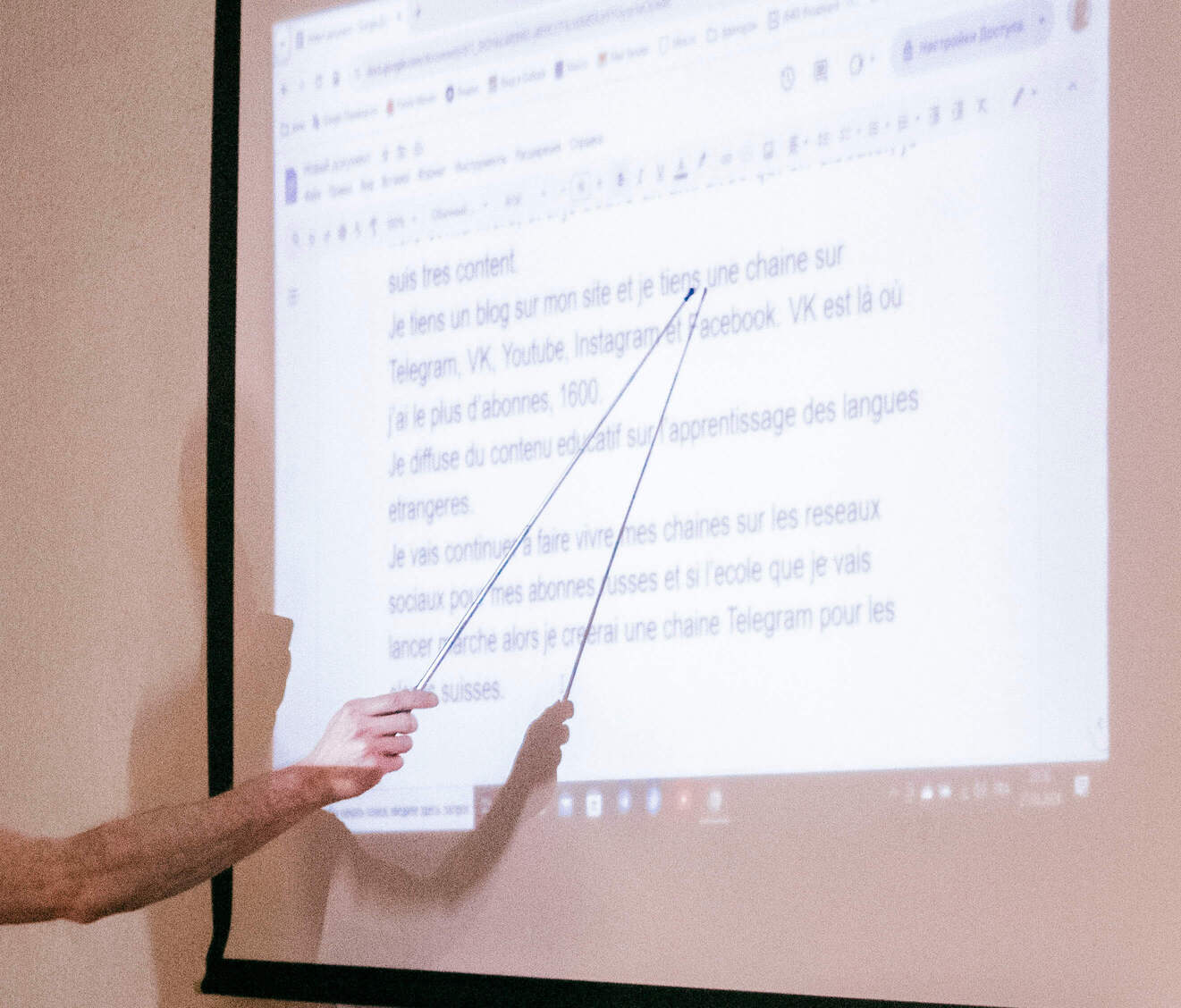
From level A2/B1 upwards, we extend to 60 or 90 minutes, which is also the standard length of a course for special requests (preparation for FIDE/DELF-DALF/TEF-TCF exams, work on specific skills, professional French...). For younger learners (children, teenagers), experience shows that 30 or 45 minutes is more than enough, except when preparing for exams such as Delf Junior.
Phonetic correction sessions last 20 minutes, due to the intensity of concentration required.
Private vs. group lessons
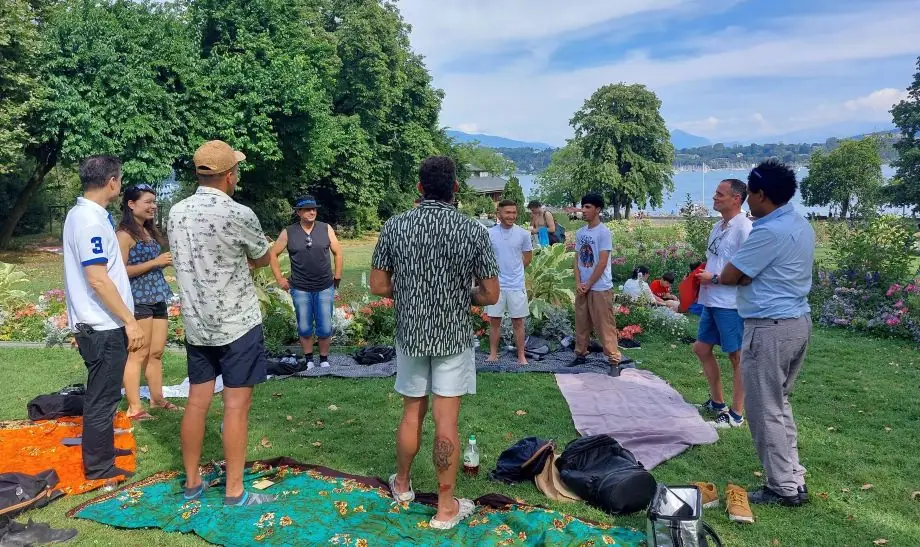
In private lessons, learning is more personalized and the teacher's full attention is on you. In group lessons, there are more opportunities to practice with different people.
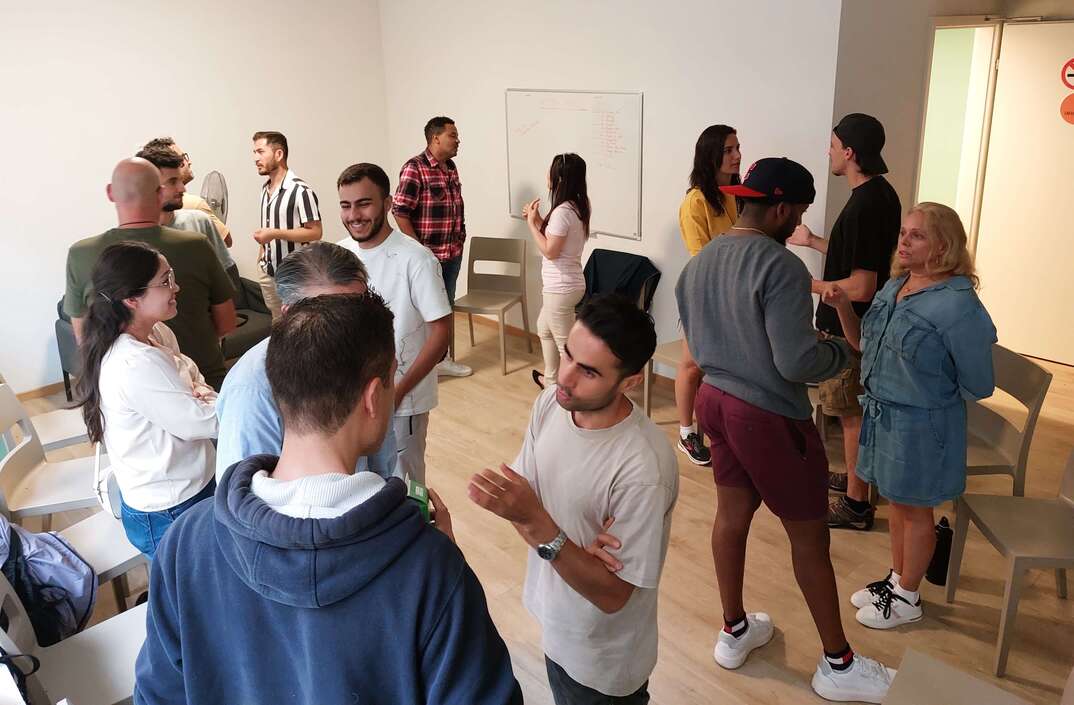
Don't forget that the more you practice, the more you retain. In one-to-one lessons, when you've asked the teacher " What's your favourite dish? " no more. In a group, you can ask everyone the same question and get lots of different answers. And it's often more stimulating and enriching!